
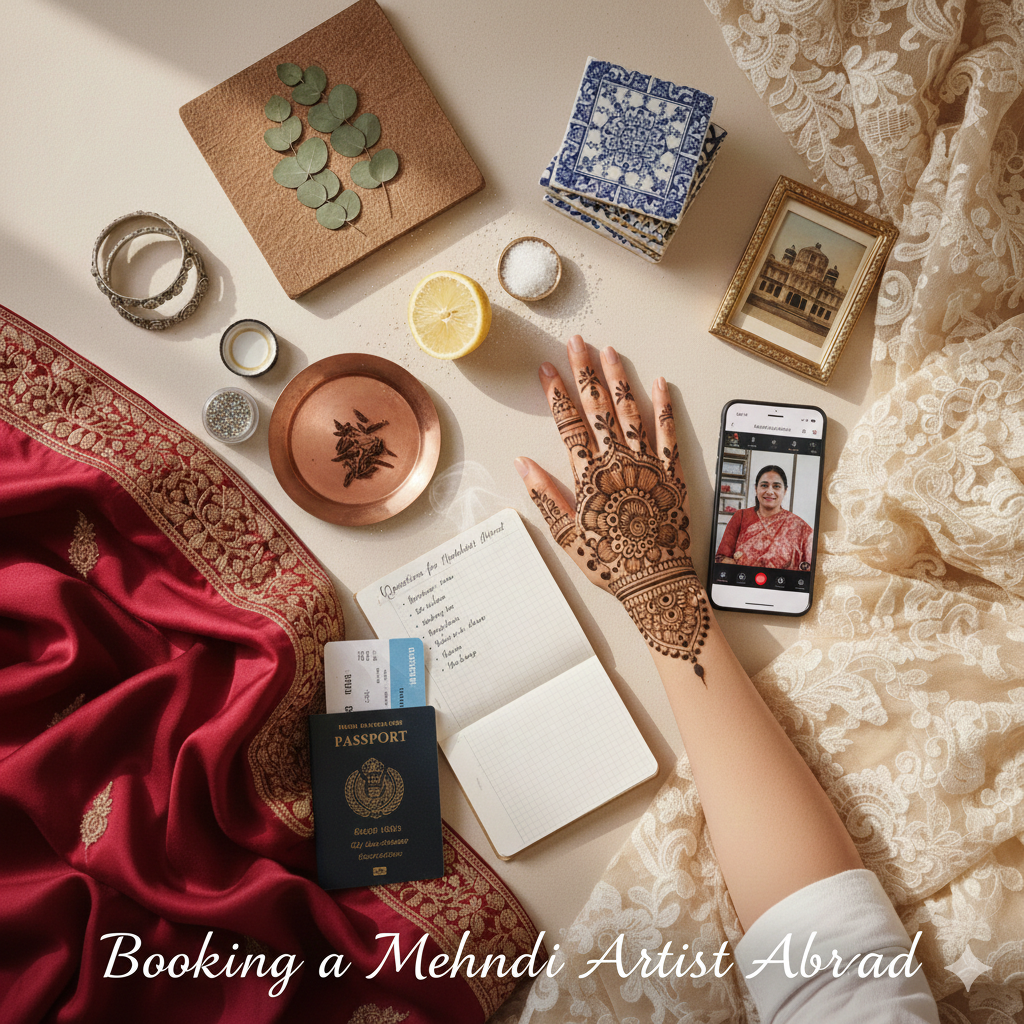
Booking a mehndi artist abroad can feel exciting but also overwhelming, especially for brides planning destination or international weddings. Differences in style, communication, pricing, and availability often catch brides off guard when planning from another country.
Knowing what to expect before you book helps you avoid last-minute stress, unexpected costs, or design disappointment. This guide covers the most important things modern brides should understand before hiring a mehndi artist outside their home country.
Table of Contents
ToggleWhy International Mehndi Booking Requires More Planning Than Local Hiring
Booking a mehndi artist within your own city usually relies on familiarity, referrals, and local reputation. When booking abroad, those informal safety nets often disappear.
International bookings require:
Clear digital communication
Remote design confirmation
Written agreements
Transparent pricing breakdowns
Advanced scheduling coordination
Brides planning destination weddings must think beyond aesthetics. Booking abroad introduces logistical complexity that affects timing, budget, and risk management.
Unlike local bookings, you cannot easily schedule last-minute meetings or trial sessions. This makes preparation and due diligence more important than ever.
Treat international mehndi booking as a structured planning task, not a casual creative decision.
Why Booking a Mehndi Artist Abroad Is Different
When booking locally, recommendations and familiarity reduce uncertainty. Booking abroad introduces new variables such as language differences, cultural styles, climate, and scheduling constraints.
Brides often assume the process is the same everywhere, but international bookings require clearer communication, stronger planning, and realistic expectations.
Understanding Regional Mehndi Styles Before You Book
Mehndi styles vary widely by region. Some artists specialize in bold Arabic layouts, while others focus on dense traditional designs or minimalist modern patterns.
Before booking, identify which style aligns with your wedding aesthetic. Brides who are still deciding between styles often find it helpful to compare Arabic and Indian mehndi differences so they can communicate preferences clearly.
How to Evaluate a Mehndi Artist’s Portfolio Properly
Many brides review only a few curated social media images before booking. This can be misleading.
Instead, evaluate:
Full-hand and full-arm coverage examples
Close-up line precision
Symmetry consistency
Variety across skin tones
Recent work, not archived posts
Ask for:
Unedited images
Images taken in natural light
Event-day photos showing final stain
A strong portfolio demonstrates consistency, not just creativity.
If the artist cannot provide recent, complete examples of bridal work, consider it a caution signal.
Availability and Timing Considerations
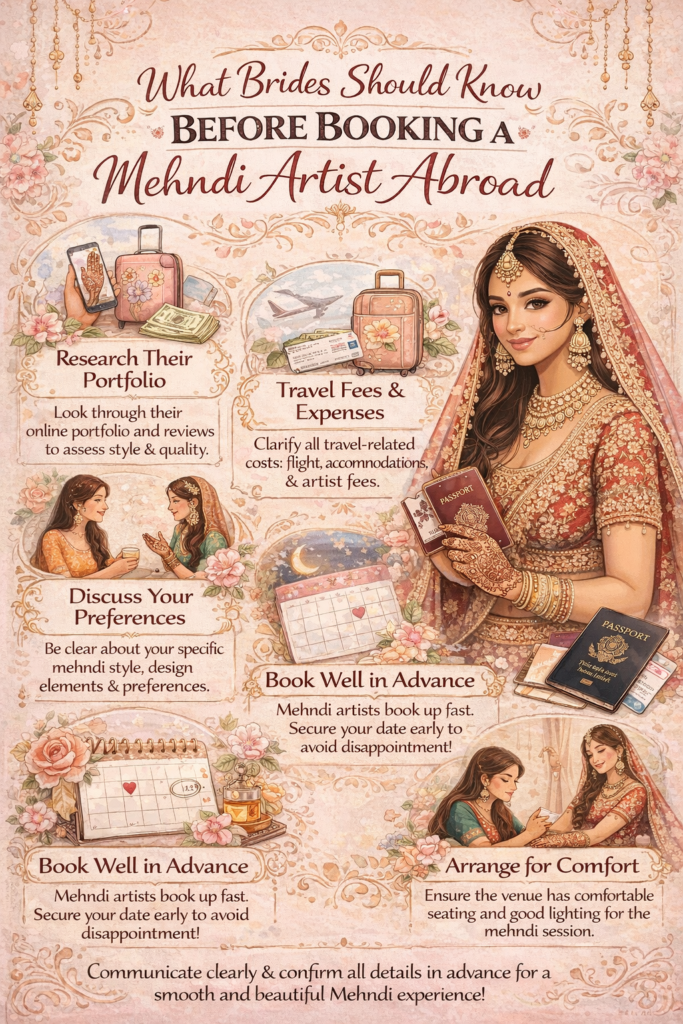
In popular wedding destinations, mehndi artists are often booked well in advance, especially during peak seasons.
Important timing factors include
- local wedding calendars
- travel distance for the artist
- application time per person
- climate related drying time
Coordinating mehndi within your bridal beauty preparation timeline ensures the application fits smoothly into your overall schedule.
Brides deciding whether to hire a professional artist or attempt a simpler approach may also want to compare professional mehndi versus DIY mehndi for destination weddings before finalizing their booking decision.
Pricing Differences Brides Should Expect
Pricing abroad may be structured differently than what you are used to.
Some artists charge
- per hand
- per hour
- per design complexity
- travel and setup fees
Understanding what is included upfront helps avoid misunderstandings and last-minute add-ons.
Estimated Cost Ranges for Booking a Mehndi Artist Abroad
While exact pricing varies by country and design complexity, brides should expect costs to fall within structured ranges rather than fixed numbers.
Typical pricing categories include:
Simple bridal designs: entry-level pricing tier
Moderate coverage with detail: mid-range tier
Full traditional coverage with intricate work: premium tier
Destination travel and accommodation fees: additional tier
Brides should also factor in:
Group application for family or bridesmaids
Extended event coverage
Peak season pricing adjustments
Instead of focusing on the lowest quote, evaluate what is included in the package. A slightly higher upfront investment may prevent last-minute stress or design dissatisfaction.
Understanding overall wedding budget allocation before confirming the booking ensures mehndi costs align with broader planning priorities.
What Typically Influences Mehndi Pricing Abroad
International pricing is rarely random. It is influenced by several measurable factors.
Primary cost drivers include:
Design complexity
Coverage area
Application duration
Destination demand level
Peak wedding season
Artist experience tier
Secondary cost drivers:
Travel distance
Accommodation requirements
Group bookings
Event duration
Rather than asking “How much does mehndi cost?”, brides should ask: “What is included in this pricing structure?”
A clear cost framework prevents misunderstandings.
Transparent pricing is a sign of professionalism. Brides should request a written cost summary that clearly outlines what is included. This avoids confusion around design complexity, group coverage, or extended event hours. Structured pricing discussions reduce financial stress later.
Contract and Deposit Best Practices
Professional international bookings should include:
Written confirmation
Deposit agreement
Cancellation policy
Timing commitment
Backup contingency
Brides should clarify:
Is the deposit refundable?
What happens if flights are delayed?
What happens if the artist falls ill?
Is there an assistant or network backup?
Even for creative services, structured agreements reduce stress.
Do not rely solely on informal messaging threads.
What to Confirm Before Booking a Mehndi Artist Abroad
| Booking Factor | What to Ask | Why It Matters |
|---|---|---|
| Design style | Ask for recent work samples | Confirms aesthetic match |
| Natural henna | Confirm ingredients | Avoids irritation |
| Timing | Confirm application window | Prevents scheduling stress |
| Travel fees | Ask about extra charges | Avoids surprise costs |
| Backup plan | Ask about contingencies | Reduces risk |
This table helps brides ask the right questions confidently.
Red Flags Brides Should Watch For
Certain warning signs can indicate potential booking risks when hiring internationally.
Be cautious if an artist:
Refuses to share recent full-hand portfolio images
Avoids discussing ingredients used in henna cones
Provides unclear pricing breakdowns
Does not confirm timing in writing
Lacks backup support for emergencies
Professional mehndi artists working in international markets typically provide clear communication and structured booking processes. Transparency reduces uncertainty.
Identifying red flags early prevents avoidable stress close to the wedding date.
Communication Tips That Prevent Disappointment
Clear communication is more important than artistic skill when booking abroad.
Share
- reference images
- coverage preferences
- timing expectations
- skin sensitivity concerns
Avoid vague requests like “traditional but modern.” Instead, explain how you want your mehndi to look and feel on the wedding day. Brides who already know how to choose a bridal mehndi design for Western weddings find this step much easier.
How to Communicate Design Expectations Clearly
Vague requests lead to vague results.
Instead of saying:
“Something traditional but modern.”
Say:
“I prefer medium coverage on the front hand, open fingertips, fine lines, and balanced negative space.”
Provide:
3–5 reference images
Coverage diagram if needed
Wrist-to-finger preference
Finger fill preference
Palm density level
Clear articulation reduces misalignment.
Brides who have already finalized their design style through structured planning find international booking much smoother.
Managing Expectations for Color and Longevity
Mehndi color abroad may develop differently due to climate, water type, or henna sourcing.
Brides should avoid expecting identical results to photos taken in different environments. Understanding how long mehndi really lasts and what affects the color helps set realistic expectations and reduces anxiety.
Aftercare Planning for Destination Weddings
Aftercare becomes more critical when traveling.
Brides should plan:
Sugar and lemon sealant availability
Climate adaptation
Moisture control
Sleep positioning after application
For humid climates:
Allow airflow and avoid excessive sweating.
For dry climates:
Maintain light moisture after paste removal.
Understanding how long mehndi really lasts and what affects the color helps brides avoid panic if tone appears lighter initially.
How Country and Climate Influence Mehndi Results
Climate and local environmental factors significantly affect mehndi development.
In humid regions, stains may darken faster. In extremely dry climates, aftercare becomes more important to prevent premature fading.
Water type, local henna sourcing, and temperature also influence final color tone. Brides planning beach weddings, desert ceremonies, or winter destinations should ask artists how local conditions impact stain results.
Planning mehndi application 36 to 48 hours before the ceremony becomes even more important when environmental variables are present.
How to Coordinate Mehndi With Other Bridal Services Abroad
International weddings often compress multiple services into a short time window. Mehndi must be coordinated carefully with:
Hair styling
Makeup trials
Nail appointments
Spray tans
Pre-wedding photography sessions
Mehndi should always be applied before nail appointments, not after. Nail technicians require clean surfaces, and filing or shaping after mehndi can disturb the design.
Spray tanning should be completed at least several days before mehndi application to avoid uneven staining.
Hair and makeup trials should not overlap with mehndi sessions, as long sitting durations may create scheduling fatigue.
Aligning mehndi within your broader bridal beauty preparation schedule ensures smooth transitions between services and prevents unnecessary stress.
Quick Checklist Before Booking a Mehndi Artist Abroad
Use this checklist to stay prepared:
Finalize your preferred mehndi style in advance
Review full portfolios, not single images
Confirm natural henna usage
Clarify pricing and travel fees
Schedule application at least 48 hours before the wedding
This checklist also works well as a printable planning aid.
Should You Bring Your Own Artist or Hire Locally?
Brides planning international weddings sometimes consider flying their preferred artist to the destination rather than hiring locally.
Each option has advantages.
| Option | Advantages | Considerations |
|---|---|---|
| Hire Local Artist | Lower travel complexity | Style familiarity required |
| Bring Your Own Artist | Guaranteed style match | Higher cost and logistics |
| Resort-Recommended Artist | Convenient coordination | Limited portfolio review |
The right choice depends on design complexity, budget flexibility, and comfort level.
Brides unsure whether professional application is necessary should also evaluate professional mehndi versus DIY options before finalizing plans.
How to Handle Language or Cultural Differences
When booking a mehndi artist abroad, communication styles may differ.
Brides should:
Confirm written details even after verbal conversations
Clarify timing in exact hours, not general phrases
Confirm start and end times
Avoid assumptions about traditional customs
Cultural differences can also affect design interpretation. Some regions favor dense coverage by default, while Western brides may prefer lighter layouts.
Providing clear visual references eliminates ambiguity.
Professional artists experienced in destination weddings are usually accustomed to multicultural expectations.
Decision Framework: Is Hiring Abroad the Right Choice for You?
Use this framework to evaluate readiness:
You are ready to book abroad if:
You have finalized your design style
You understand cost structure
You confirmed timing window
You clarified cancellation policy
You reviewed full portfolio examples
You may need more planning if:
You are unsure about coverage level
You are still deciding between minimalist and traditional styles
You have not aligned mehndi timing with your bridal beauty preparation schedule
Budget allocation is unclear
Decision clarity prevents last-minute stress.
How Early Should You Finalize Your Design?
Many brides delay design decisions until close to the wedding. For international bookings, this creates unnecessary risk.
Ideally:
Final design direction should be confirmed at least 3–4 weeks before the wedding.
Coverage level should be decided 2–3 weeks before application.
Exact placement preferences should be discussed 1–2 weeks prior.
Early confirmation allows the artist to allocate proper time.
Brides who wait until the last week often face rushed communication and limited flexibility.
If you are still exploring design options, reviewing how to choose a bridal mehndi design for Western weddings can help finalize decisions before booking.
How to Compare Multiple Mehndi Artists Objectively
When reviewing more than one artist abroad, emotional preference can overshadow practical evaluation. A structured comparison helps brides choose confidently.
Create a simple evaluation checklist and score each artist based on:
Portfolio consistency
Communication responsiveness
Transparency in pricing
Experience with destination weddings
Flexibility in scheduling
Clarity of contract terms
Instead of asking “Who do I like more?”, ask:
“Who reduces risk the most?”
Professionalism often matters more than minor stylistic differences when booking internationally.
Brides planning larger destination celebrations should prioritize reliability and structured communication over aesthetic preference alone.
Frequently Asked Questions
How early should brides book a mehndi artist abroad
Brides should ideally book a mehndi artist at least two to three months in advance for destination or international weddings. Popular wedding locations fill quickly, especially during peak seasons. Early booking also allows time for design discussions and scheduling coordination.
Is it safe to use henna from a foreign country
Using henna abroad is generally safe when the artist uses natural, plant-based henna. Brides should always confirm ingredients and avoid cones with strong artificial scents. A small test application can provide additional peace of mind.
Can brides request custom mehndi designs abroad
Yes, most professional mehndi artists accept custom design requests. Brides should share clear reference images and explain coverage preferences. Confirming details in advance helps ensure the final design matches expectations.
What if the mehndi artist cancels at the last minute
Brides should ask about backup plans before booking. Some artists have assistants or professional networks for emergencies. Choosing an artist with experience in destination weddings reduces the risk of last-minute cancellations.
Does booking a mehndi artist abroad cost more
Costs vary by location and demand. While base pricing may be similar, travel fees, setup time, or limited availability can increase total cost. Clarifying pricing structure early helps avoid surprises.
Emotional Preparation: Setting Realistic Expectations
Booking internationally can create anxiety around perfection.
Brides should remember:
No two mehndi applications are identical
Climate influences stain depth
Slight variations are normal
Color deepens over 48 hours
Focusing on experience rather than perfection helps maintain calm.
Mehndi should enhance your wedding celebration, not create pressure.
The Importance of a Trial or Consultation Call
While full trial sessions may not always be practical for destination weddings, virtual consultations can be extremely helpful.
A short video call allows brides to:
Discuss coverage preferences
Review timing expectations
Confirm application duration
Clarify pricing structure
Build comfort with the artist
This step reduces uncertainty significantly.
Even a 15–20 minute structured consultation improves alignment and confidence before confirming an international booking.
How International Wedding Logistics Can Impact Mehndi Timing
International weddings often involve:
Time zone changes
Jet lag
Vendor coordination delays
Venue access restrictions
Event schedule compression
All of these can indirectly affect mehndi application timing.
For example:
Late venue access may shorten the planned application window.
Delayed flights may require flexible scheduling.
Rehearsal dinners may reduce rest time after mehndi application.
Brides should allow buffer time between mehndi and major events.
Scheduling mehndi at least 36–48 hours before the ceremony provides flexibility if small logistical disruptions occur.
Careful planning reduces the risk of rushed application or incomplete design work.
Final Thoughts
Booking a mehndi artist abroad does not have to be stressful. With clear planning, realistic expectations, and thoughtful communication, brides can enjoy a smooth experience and beautiful results that complement their international wedding perfectly.
Recent Posts
- Cultural Meaning of Mehndi Explained for Non-Indian Weddings
- How Much Does Bridal Mehndi Cost in Different Countries : 2026 Price Guide
- Bridal Mehndi Timeline: When to Apply Mehndi Before the Wedding
- How to Prepare Your Skin for Mehndi Application Before a Wedding
- Professional Mehndi vs DIY Mehndi for Destination Weddings: What Brides Should Choose?

