
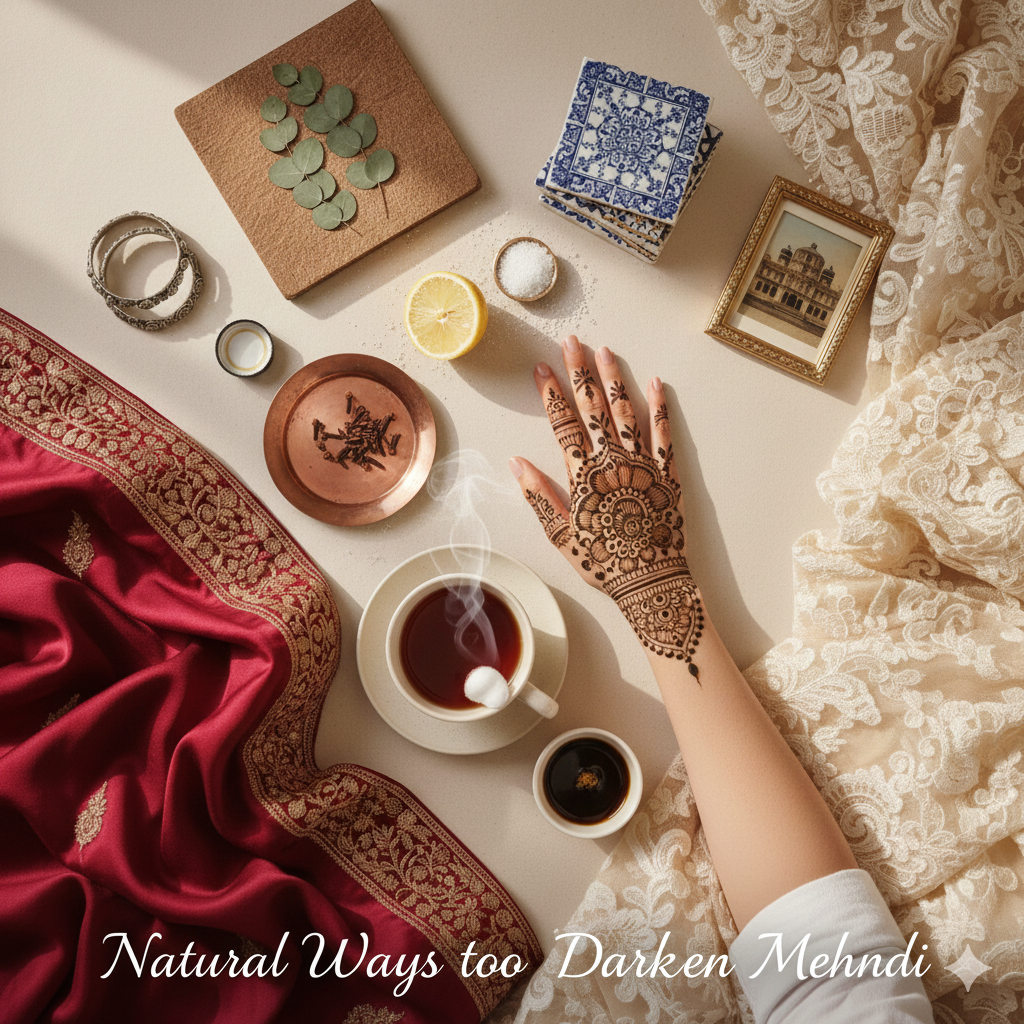
Many brides want rich, dark mehndi color but prefer to avoid chemical cones or artificial enhancers. While social media often promotes quick fixes, the truth is that mehndi color deepens naturally when the right methods are used at the right time.
Understanding how henna reacts with skin allows you to darken mehndi safely and effectively without damaging your skin. This guide explains proven natural ways to deepen mehndi color using simple techniques that actually work.
Table of Contents
ToggleHow Mehndi Color Develops Naturally
Mehndi does not turn dark instantly. After the paste is removed, the stain begins as a light orange shade and darkens gradually over the next 24 to 72 hours through oxidation.
This process depends on skin warmth, henna quality, timing, and aftercare. Natural methods support this process rather than forcing artificial color changes.
Use High Quality Natural Henna
The most important factor in dark mehndi color is the quality of henna itself.
Natural henna powder:
Comes from the henna plant
Has an earthy smell
Produces orange to brown stains
Chemical cones may give instant color but fade unevenly and can irritate skin. Brides planning international or Western weddings benefit most from natural henna because it looks softer and photographs better.
Keep Mehndi Paste on the Skin Longer
Allowing the paste to remain on the skin for several hours improves dye absorption.
For best results:
Keep paste on for at least 6 to 8 hours
Avoid cracking or flaking
Gently scrape off paste instead of washing
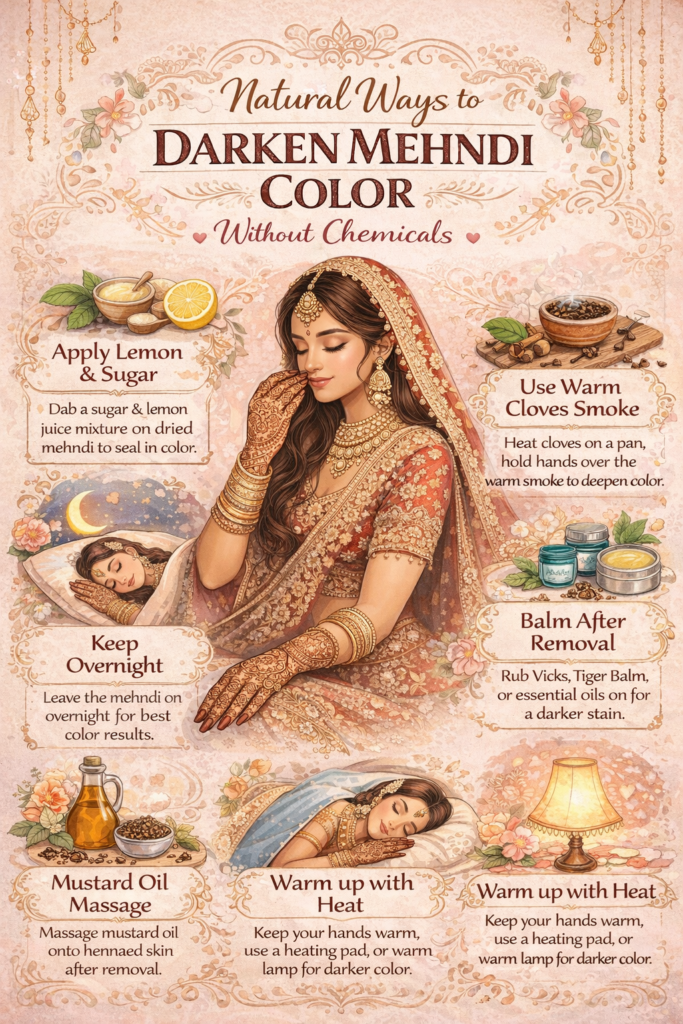
This simple step alone significantly improves color depth. Natural darkening methods work best when you understand how long mehndi lasts, since color continues to deepen gradually during the first few days after application.
Use Gentle Heat to Support Oxidation
Warmth helps henna dye bind to the skin.
Natural heat methods include:
Keeping hands warm with gloves or socks
Staying in a warm room
Avoiding cold environments immediately after application
Avoid direct heat or extreme methods that may irritate skin.
Avoid Water Contact After Removal
Water interferes with oxidation during the early development stage.
After removing the paste:
Avoid water for at least 12 hours
Minimize soap use for the first two days
Pat hands dry if accidental contact occurs
This step is often overlooked but has a major impact on final color.
Natural Methods vs Chemical Enhancers
| Method | Safety | Color Result | Longevity |
|---|---|---|---|
| Natural henna + warmth | Very safe | Deep brown tones | Long lasting |
| Proper timing and aftercare | Very safe | Even color | Long lasting |
| Chemical cones | Risky | Artificial dark | Fades unevenly |
| Instant darkening products | Risky | Temporary | Short lived |
This comparison helps brides choose safe methods with realistic expectations.
Timing Matters More Than Tricks
No natural method can darken mehndi overnight if timing is wrong.
Applying mehndi about 48 hours before the wedding gives enough time for natural oxidation. Brides who plan this alongside their bridal beauty preparation timeline tend to achieve the most consistent results.
Understanding how long mehndi really lasts and what affects the color also helps avoid unrealistic expectations.
Timing plays a crucial role in color intensity, which is why knowing when to apply mehndi helps natural methods deliver deeper, longer-lasting results.
Quick Checklist for Darkening Mehndi Naturally
Use this checklist for best results:
Choose natural, high quality henna
Keep paste on for several hours
Avoid water for at least 12 hours
Use gentle warmth, not extreme heat
Apply light oil only after oxidation
Mehndi aftercare should be planned alongside a complete bridal beauty preparation timeline to avoid rushed decisions and uneven color development.
Common Natural Myths to Avoid
Some popular advice can do more harm than good:
Using harsh heat sources
Applying chemical sealants
Scrubbing hands to “activate” color
Expecting instant results
Natural methods require patience, not shortcuts.
If you’re looking for additional techniques, these proven ways to make your mehndi darker complement natural aftercare methods without using chemicals.
Frequently Asked Questions
Can mehndi really get dark without chemicals
Yes, mehndi can develop rich color naturally when high quality henna, proper timing, and good aftercare are used. Chemical products are not necessary and often cause uneven fading or skin irritation.
How long does it take for natural mehndi to darken
Natural mehndi usually darkens over 24 to 72 hours after paste removal. The deepest color appears around the second or third day depending on skin type, warmth, and aftercare.
Does lemon and sugar make mehndi darker
Lemon and sugar help keep the paste moist and in contact with the skin longer, which can support better dye absorption. They do not directly darken color but assist the natural staining process when used correctly.
Is heat safe for darkening mehndi
Gentle warmth is safe and helpful, but excessive heat is not recommended. Keeping hands warm naturally supports oxidation without irritating the skin or damaging the stain.
Why does natural mehndi fade faster for some people
Frequent hand washing, skin type, and lifestyle affect fading speed. Natural mehndi fades gradually and evenly, which is normal. Proper aftercare helps extend longevity.
Final Thoughts
Dark mehndi color does not require chemicals or risky shortcuts. By understanding how henna works and supporting its natural development, brides can achieve beautiful, long lasting color that looks elegant, photographs well, and feels comfortable for modern weddings.
