Bridal mehndi is meant to enhance your wedding experience, not add stress or disappointment. Yet many modern brides, especially those planning Western or international weddings, make avoidable mehndi mistakes that affect comfort, appearance, and photography.
Most of these issues are not caused by the design itself, but by timing, planning, or unrealistic expectations. This guide highlights the most common bridal mehndi mistakes and explains how to avoid them with simple, practical decisions.
Table of Contents
ToggleWhy Mehndi Mistakes Are More Common in Modern Weddings
Modern weddings often involve travel, tight schedules, minimalist aesthetics, and professional photography. When mehndi is added without adjusting for these factors, problems arise.
- Common reasons include
- lack of planning
- copying designs without context
- last minute decisions
- ignoring comfort and practicality
Understanding these risks early helps brides make smarter choices.
The Hidden Cost of Bridal Mehndi Mistakes
While many mistakes seem minor at first, they can affect:
Wedding day comfort
Photography quality
Budget allocation
Timeline coordination
Emotional confidence
Because mehndi is highly visible in close-up photos, ring exchanges, bouquet shots, and guest greetings, small planning errors become noticeable.
Brides planning destination or international weddings face higher stakes because last-minute corrections are difficult.
Avoiding mistakes is not about perfection. It is about reducing preventable stress.
Why Small Mehndi Errors Become Big Wedding-Day Problems
Bridal mehndi is highly visible throughout the wedding day. It appears in:
Ring exchange photographs
Bouquet shots
Close-up bridal portraits
Guest greetings
Reception dance moments
Because hands are constantly photographed and noticed, even minor mehndi issues become amplified.
For example:
Slight smudging becomes obvious in high-resolution photos
Uneven coverage draws attention in minimalist wedding aesthetics
Patchy stain contrasts sharply against white or light gowns
Modern weddings emphasize detail. Mehndi mistakes that may have gone unnoticed in casual settings are more visible in structured, professionally photographed events.
Preventing small errors ensures confidence and comfort during the ceremony.
The Most Common Bridal Mehndi Mistakes and Solutions
| Mistake | Why It Happens | How to Avoid It |
|---|---|---|
| Choosing overly dense designs | Following traditional trends blindly | Match design complexity with wedding style |
| Applying mehndi too late | Tight schedules | Apply at least 48 hours before the wedding |
| Ignoring dress and jewelry | Planning in isolation | Coordinate mehndi with outfit and accessories |
| Skipping a design test | Overconfidence | Test a small motif beforehand |
| Overdoing aftercare | Misinformation | Follow simple, gentle aftercare |
Many bridal mehndi issues stem from rushed or uninformed artist selection. Understanding key factors before booking a mehndi artist abroad helps brides avoid common mistakes and unmet expectations.
Mistake 0: Booking Without Finalizing Design Direction
One of the earliest mistakes brides make is booking a mehndi artist before deciding what style they truly want.
This creates:
Misaligned expectations
Design revisions close to the wedding
Time pressure
Confusion during application
How to avoid this:
Finalize your design direction before confirming the booking. If you are unsure whether minimalist, Arabic, fusion, or traditional styles suit your wedding, review structured design comparisons first.
Clear design clarity prevents rushed decision-making later.
Mistake 1: Choosing a Design That Does Not Match the Wedding Style
Many brides select mehndi designs based on trends or social media inspiration without considering their actual wedding aesthetic.
How to avoid this
Choose designs that reflect your venue, dress, and overall mood. Minimalist gowns often pair better with lighter mehndi, while cultural ceremonies may support more detailed patterns.
Internal link opportunity
How to Choose a Bridal Mehndi Design for Western Weddings
Mistake 2: Applying Mehndi Too Close to the Wedding Day
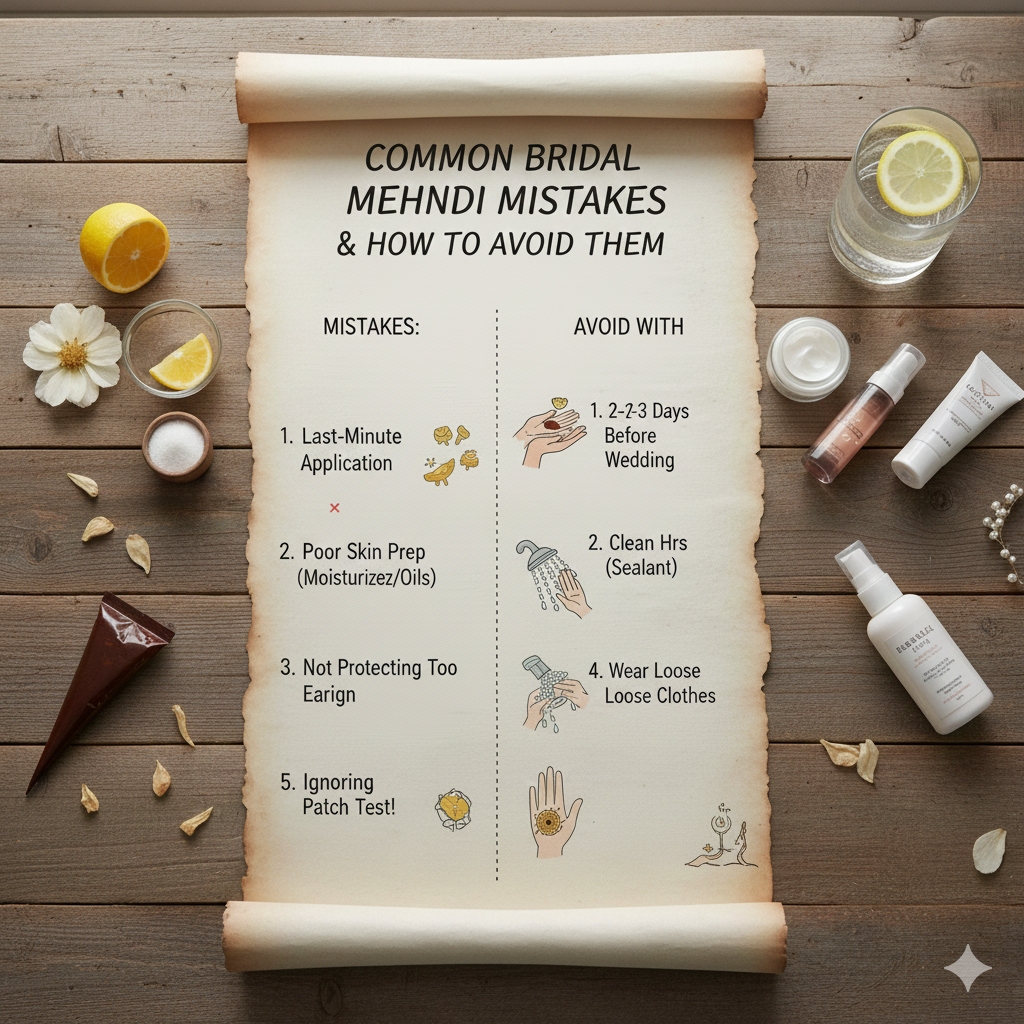
Applying mehndi less than 24 hours before the ceremony often results in lighter color, smudging, or discomfort.
How to avoid this
Schedule mehndi approximately 48 hours before the wedding. This allows the color to deepen naturally and ensures your hands feel comfortable on the wedding day.
Applying mehndi too late does not only affect color depth. It also affects comfort and scheduling.
Common timing problems include:
Paste not fully dried before events
Limited time for proper aftercare
Sleep discomfort
Rushed coordination with nail or hair appointments
For destination weddings, travel adds another risk layer. Flights or time zone shifts can delay stain development.
Scheduling mehndi 36–48 hours before the ceremony provides flexibility.
Applying mehndi too late is one of the most frequent errors. Follow this Bridal Mehndi Application Timeline to avoid rushed results.
Many bridal mehndi issues can be avoided by following a thoughtful pre-wedding self-care approach that supports healthy skin and better color results.
Mistake 3: Overloading Hands With Heavy Coverage
Excessive coverage can feel uncomfortable and visually overpowering, especially in Western weddings where simplicity is preferred.
How to avoid this
Opt for selective coverage such as palms only or partial hand designs. Leaving negative space improves comfort and enhances photography.
Internal link opportunity
Minimalist vs Traditional Mehndi Designs What Suits Modern Brides
Uneven or light stains are common concerns, which is why understanding natural ways to darken mehndi can prevent disappointment on important occasions.
Mistake 4: Not Aligning Mehndi With Nail and Beauty Appointments
Many brides schedule nail appointments before mehndi, which can cause friction.
Common conflicts include:
Filing or reshaping nails after mehndi application
Acetone exposure affecting stain
Smudging designs during manicure sessions
How to avoid this:
Schedule nail appointments after mehndi has fully dried and darkened. Ideally, manicure appointments should occur one day after mehndi application.
Similarly, avoid heavy facials or chemical treatments close to the mehndi date.
Bridal beauty services should complement each other, not interfere.
Mistake 5: Ignoring Hand Comfort and Mobility
Brides often focus on visual appeal but forget how frequently hands are used during the wedding day.
Heavy or extremely dense coverage can feel restrictive, especially during:
Ring exchanges
Bouquet holding
Greeting guests
Reception dining
How to avoid this:
Balance coverage with mobility. Consider selective coverage, open fingertips, and negative space to improve comfort without sacrificing elegance.
Mistake 6: Not Considering Photography Impact
Mehndi that looks beautiful up close may not photograph well under natural or professional lighting.
How to avoid this
Choose designs with clean lines and spacing. Avoid extremely fine details that may blur in photos. Discuss hand poses with your photographer in advance.
Mistake 7: Underestimating the Impact of Destination Logistics
Destination weddings introduce variables such as:
Climate differences
Water type
Travel fatigue
Limited artist availability
Brides who do not account for these factors may experience lighter stains or scheduling conflicts.
How to avoid this:
Coordinate mehndi timing with travel plans. Avoid applying mehndi immediately before long flights. Confirm venue access times for application.
Planning ahead reduces unpredictability.
Mistake 8: Failing to Consider Skin Preparation
Even a perfect design can underperform if the skin is not prepared properly.
Common preparation mistakes include:
Applying heavy lotion right before application
Skipping gentle exfoliation
Ignoring hydration
Waxing too close to the mehndi session
How to avoid this:
Exfoliate lightly 3–5 days before application
Avoid lotion on the day of application
Complete waxing at least 48 hours earlier
Maintain hydration in the days leading up
Proper skin preparation directly influences stain depth and longevity.
Mistake 9: Using Low Quality or Chemical Henna
Low quality henna may cause uneven color, irritation, or unrealistic staining.
How to avoid this
Use natural henna from a trusted source. Natural stains appear softer, photograph better, and fade evenly.
Mistake 10: Prioritizing Trend Over Personal Style
Social media trends often influence bridal decisions.
However, copying a viral design without adapting it to your:
Hand shape
Wedding style
Dress silhouette
Cultural context
can lead to dissatisfaction.
How to avoid this:
Choose designs that reflect your personal aesthetic rather than current trends. Trends fade, but wedding photos last.
Mistake 11: Choosing Cost Over Quality Without Understanding the Trade-Off
While budget matters, selecting the lowest quote without evaluating quality may lead to:
Uneven line work
Low-quality henna
Limited design flexibility
Inconsistent stain
How to avoid this:
Request full portfolio examples, confirm ingredients, and understand pricing structure before committing.
Brides unsure whether professional services are necessary should also evaluate the difference between professional and DIY mehndi for destination weddings before finalizing their choice.
Mistake 12: Assuming Darker Always Means Better
Some brides believe extremely dark mehndi automatically looks better.
However:
Artificial darkeners may contain chemicals
Extremely dark stains can appear unnatural
Deep black tones may clash with minimalist aesthetics
Natural henna develops into warm brown or deep rust tones. These shades photograph beautifully and fade evenly.
Instead of chasing maximum darkness, aim for balanced, natural color development.
Understanding how long mehndi lasts and what affects its color can help manage expectations more realistically.
Mistake 13: Ignoring Post-Application Aftercare Discipline
Even perfectly applied mehndi can fade prematurely if aftercare is neglected.
Common aftercare errors include:
Washing hands too soon
Using soap immediately after paste removal
Excessive water exposure
Scrubbing skin within the first 24 hours
How to avoid this:
Keep paste on as long as recommended
Remove gently without water initially
Avoid soap for the first 12–24 hours
Apply light natural oils after stain develops
Simple aftercare habits dramatically influence final color depth.
Brides who prepare skin properly and follow gentle aftercare rarely experience disappointing stain results.
Mistake 14: Overcomplicating the Experience
Wedding planning already involves multiple vendors and timelines. Mehndi should not become another source of pressure.
Overcomplication happens when:
Brides continuously change design decisions
Multiple opinions influence coverage
Timing adjustments are made repeatedly
Perfection becomes the goal
How to avoid this:
Make clear decisions early and trust the process.
Structured planning reduces last-minute anxiety.
Mistake 15: Not Confirming Application Duration in Advance
Many brides underestimate how long bridal mehndi actually takes.
Detailed bridal designs can require:
2 to 4 hours for moderate coverage
4 to 6 hours for full traditional coverage
Additional time if family members are included
If duration is not confirmed clearly, brides may feel fatigued or rushed.
How to avoid this:
Confirm exact application time estimate
Schedule breaks if needed
Avoid booking mehndi on an already busy day
Ensure comfortable seating and lighting during application
Understanding time commitment prevents exhaustion before the ceremony.
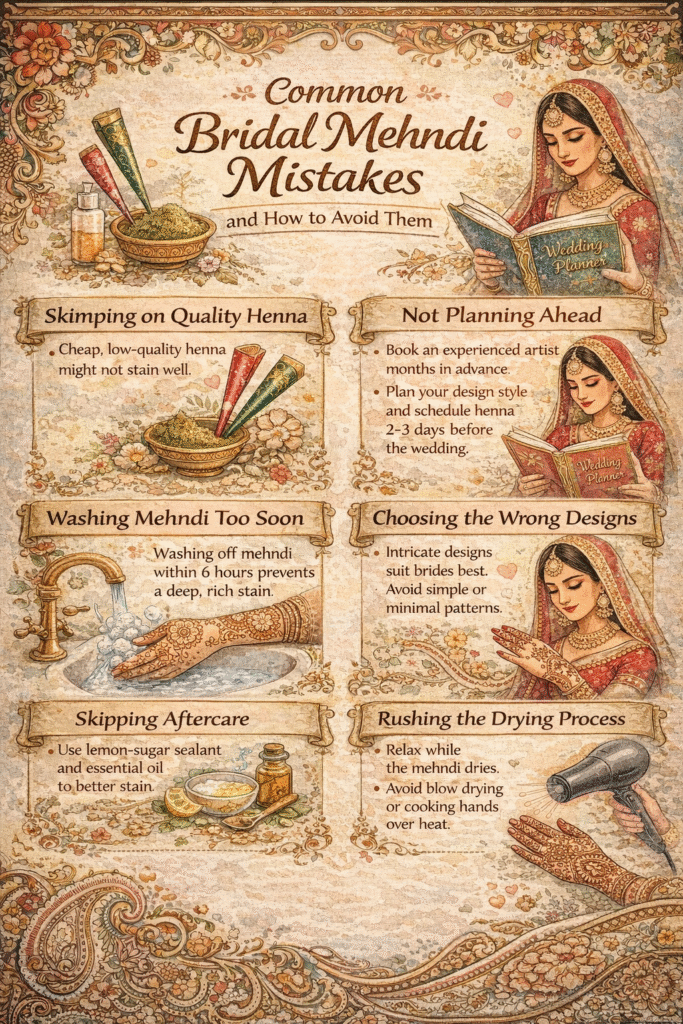
Quick Checklist to Avoid Bridal Mehndi Mistakes
Use this checklist before finalizing your mehndi plans
Match the design with your wedding style and dress
Apply mehndi at least 48 hours before the ceremony
Avoid copying designs without adapting them
Test henna quality in advance
Prioritize comfort and practicality
This checklist works well as a printable guide for brides.
Before confirming your final mehndi plan, review these final checkpoints:
Have I aligned mehndi with travel schedules?
Have I confirmed ingredient quality?
Is the design comfortable for extended wear?
Have I communicated expectations clearly?
Have I allowed enough time for natural color development?
These additional checkpoints ensure both aesthetic and practical readiness.
One common mistake brides make is choosing a mehndi style without understanding its visual impact. Comparing Arabic and Indian mehndi styles helps prevent mismatched designs and unmet expectations.
Frequently Asked Questions
Can heavy mehndi look out of place in Western weddings
Heavy mehndi can feel visually overwhelming in Western weddings that prioritize minimalism. Brides who prefer a modern look often benefit from lighter coverage or selective designs that complement their dress and venue without overpowering the overall aesthetic.
Does mehndi affect hand photography
Yes, mehndi significantly affects hand photography. Dense or overly intricate designs can blur in close up shots, while clean and spaced designs photograph more clearly. Lighting and pose also play a role in how mehndi appears in wedding photos.
Is it risky to try a new mehndi style without testing
Trying a new mehndi style without testing can be risky. A small test motif helps you understand color depth, comfort, and design suitability. This reduces the chance of disappointment on the wedding day.
How can brides avoid mehndi related stress
Brides can avoid stress by planning mehndi early, keeping designs aligned with their wedding style, and avoiding last-minute changes. Clear communication with the artist and realistic expectations make the experience smoother and more enjoyable.
Can destination climate affect mehndi mistakes?
Yes. Humidity, dryness, and temperature influence stain development and comfort. Brides should adapt aftercare based on climate conditions.
Is DIY mehndi more prone to mistakes?
DIY mehndi increases the risk of uneven lines or patchy stain, especially for complex designs. Brides choosing this route should practice in advance.
A Simple Framework to Avoid Bridal Mehndi Regret
Before confirming your final mehndi plan, ask yourself:
Is the design aligned with my wedding aesthetic?
Is the timing at least 36–48 hours before the ceremony?
Have I confirmed quality and ingredients?
Does the coverage allow comfort and mobility?
Is the decision based on clarity rather than trend pressure?
If you can answer yes to all five, you are unlikely to face avoidable mehndi regret.
How Professional Guidance Reduces Bridal Mehndi Mistakes
Experienced mehndi artists anticipate common bridal concerns, including:
Timing coordination
Climate adaptation
Design proportion
Stain development
Comfort adjustments
Brides unsure whether professional services are necessary should evaluate professional versus DIY mehndi options before making their final decision.
Professional guidance often prevents the most common mistakes outlined above.
Bridal Mehndi Mistakes Are Preventable With Structured Planning
The most important takeaway is this:
Bridal mehndi mistakes rarely happen because of bad design. They happen because of:
Rushed decisions
Poor coordination
Miscommunication
Unrealistic expectations
When mehndi is planned alongside:
Dress selection
Photography planning
Travel scheduling
Overall bridal beauty timeline
it becomes a smooth and meaningful part of the celebration.
Structured planning reduces risk more effectively than last-minute corrections.
Thoughtful preparation transforms mehndi from a potential stress point into a confident bridal detail.
Final Thoughts
Most bridal mehndi mistakes are easy to avoid with thoughtful planning and realistic expectations. When mehndi is approached as part of the overall wedding aesthetic rather than an isolated ritual, it enhances the bridal experience instead of complicating it.
Recent Posts
- Lalle Henna Designs 2026 — 35 Beautiful Nigerian & Hausa Mehndi Patterns for Eid
- Simple Henna Designs for Eid 2026 — Easy Patterns for Kids & Beginners
- Khaleeji Henna Designs 2026 — 50 Stunning Gulf-Style Mehndi Patterns
- Khafif Mehndi Designs 2026 — 40 Light & Minimalist Henna Patterns (Arabic Style)
- Cultural Meaning of Mehndi Explained for Non-Indian Weddings