
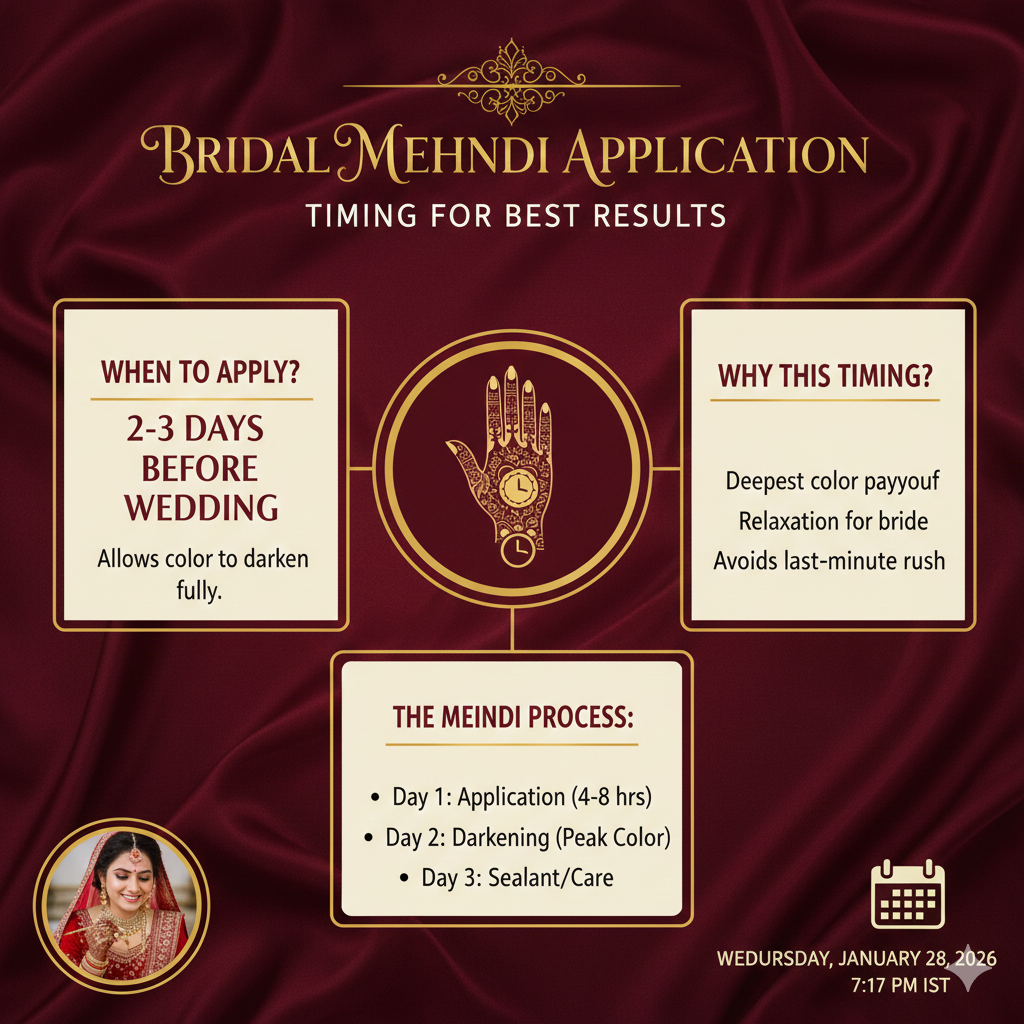
Timing plays a critical role in how bridal mehndi looks and lasts. Many brides focus on design selection but overlook when mehndi should actually be applied.
For Western and destination weddings, the ideal application window is not random. It depends on stain development time, travel plans, photography schedules, and overall bridal beauty preparation.
This guide explains exactly when to apply mehndi before your wedding to achieve the best color, comfort, and visual balance.
Table of Contents
ToggleWhy Mehndi Timing Matters for Brides
Mehndi is not an instant process. The color develops gradually after application and continues to deepen over the next 24 to 72 hours.
Proper timing ensures:
-
Darker, richer color on the wedding day
-
Enough time for oxidation and stain development
-
Comfort during wedding rituals and events
-
Reduced risk of smudging or irritation
Understanding timing helps brides avoid common last-minute mistakes
Many of these issues can be prevented by following a structured bridal beauty schedule. Brides planning multicultural or destination weddings can refer to a detailed Bridal Beauty Preparation Timeline for International Weddings to align mehndi with other beauty treatments.
How Long Mehndi Takes to Develop Fully
Mehndi does not reach its deepest color immediately after application.
Typical stain development timeline:
-
First 12 hours: Light orange tone
-
24 hours: Darkening begins
-
36 to 48 hours: Peak color depth
-
3 to 7 days: Gradual softening
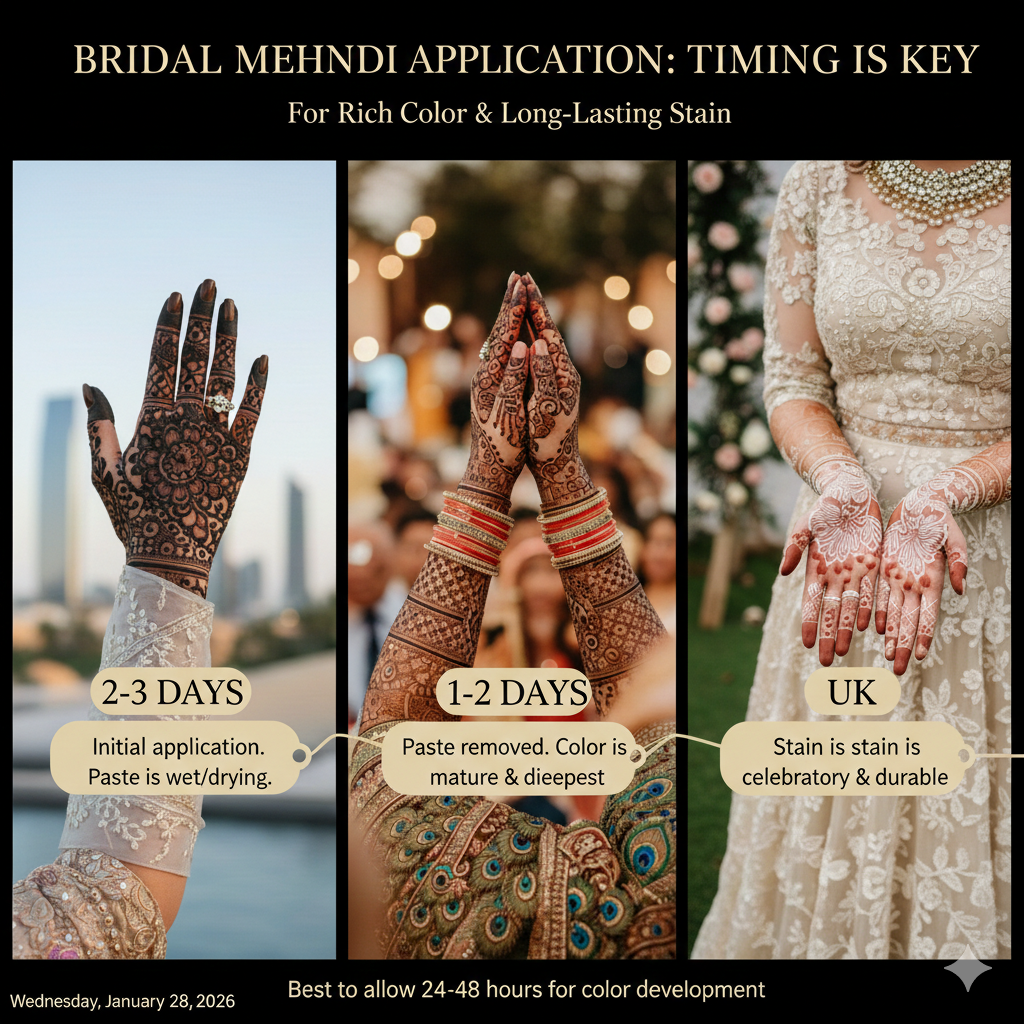
For most brides, the best visual results appear 36 to 48 hours after application.
This is why applying mehndi too close to the ceremony can result in lighter tones in wedding photographs.
Ideal Mehndi Application Timeline for Brides
| Timeline Before Ceremony | Expected Result |
|---|---|
| Same day | Too light, not recommended |
| 24 hours before | Medium tone, still developing |
| 36–48 hours before | Deepest, most photogenic stain |
| 3 days before | Slightly softer but still vibrant |
| 4+ days before | Gradually fading |
For Western weddings, applying mehndi 2 days before the ceremony is usually ideal.
Design complexity also influences how early you should apply mehndi. Brides still deciding on layout and coverage can explore this guide on How to Choose a Bridal Mehndi Design for Western Weddings before locking their appointment date.
How Wedding Format Affects Timing
Civil or Registry Weddings
Light designs can be applied 24 to 36 hours before the ceremony.
Destination Weddings
Apply mehndi after arriving at the destination to avoid travel interference.
Multiday Celebrations
Apply mehndi early enough to allow full color development before main photography events.
Timing should align with your full bridal beauty preparation timeline to avoid overlap with hair, nails, or skincare treatments.
Factors That Affect When Brides Should Apply Mehndi
Not all brides need the same schedule. Timing can vary based on:
-
Skin type and body temperature
-
Mehndi quality and freshness
-
Design complexity and coverage
-
Climate and humidity
-
Travel or destination wedding schedules
Brides planning international weddings often align mehndi timing with their bridal beauty preparation timeline to avoid conflicts with other beauty services.
For brides still deciding between hiring a professional artist or applying mehndi themselves, this comparison of professional and DIY mehndi for destination weddings explains how timing and complexity influence the best choice.
Why Applying Mehndi Too Early May Not Be Ideal
Applying mehndi more than 4 days before the wedding can result in noticeable fading by the ceremony.
Factors influencing fading:
-
Frequent hand washing
-
Climate conditions
-
Skin type
-
Physical activity
Brides planning extended travel or honeymoon departures should consider how long they want the stain to last after the wedding as well.
Why Applying Mehndi Too Late Can Be Risky
Applying mehndi on the wedding morning may seem convenient, but it carries risks:
-
Lighter stain in photos
-
Sticky drying process
-
Limited time for proper aftercare
-
Increased stress on an already busy day
For destination weddings, same-day application is rarely recommended.
How Brides Can Plan Mehndi Timing Smoothly
Brides can avoid stress by:
-
Fixing the mehndi date early
-
Coordinating with travel plans
-
Avoiding new products before application
-
Following aftercare instructions carefully
Planning ahead also helps when booking a mehndi artist abroad, where availability may be limited.
How Mehndi Timing Fits Into Your Overall Beauty Schedule
Mehndi should not be treated as an isolated task.
It should align with:
-
Waxing or hair removal
-
Facials
-
Nail appointments
-
Hair trials
-
Travel schedules
For example:
-
Waxing should be completed at least 48 hours before mehndi.
-
Heavy facials should not be scheduled immediately before application.
If you are unsure how to structure these steps, reviewing a detailed bridal beauty preparation timeline for international weddings can help organize all beauty appointments effectively.
Quick Timing Checklist Before Booking Your Mehndi Appointment
Before confirming your mehndi session, ask yourself:
-
Is my wedding at least 36–48 hours after application?
-
Have I completed waxing or hair removal 48 hours prior?
-
Are my nail appointments scheduled after mehndi application?
-
Am I traveling before or after mehndi?
-
Do I have enough time for proper aftercare?
If the answer is yes to all, your timing is likely appropriate.
Common Timing Mistakes Brides Make
Some frequent mistakes include:
-
Applying mehndi the night before the wedding
-
Washing hands too soon
-
Not accounting for travel or jet lag
-
Ignoring aftercare instructions
Most of these issues can be avoided with simple planning.
Special Considerations for Destination Weddings
Travel affects stain quality.
If flying to your wedding location:
-
Apply mehndi after arrival whenever possible.
-
Avoid applying mehndi immediately before long flights.
-
Maintain hydration during travel.
Climate also matters. Humid environments may help deepen stain, while extremely dry conditions may require extra aftercare.
How Design Complexity Influences Application Timing
Minimalist designs:
-
Require less time
-
May develop evenly even with shorter timelines
Detailed bridal designs:
-
Take longer to apply
-
Benefit more from 48-hour development window
When selecting your design, consider how coverage and detail affect both timing and comfort. Brides comparing design styles may also find it helpful to explore how to choose a bridal mehndi design for Western weddings before finalizing both design and application date.
FAQs on Bridal Mehndi Timeline
Is applying mehndi three days before the wedding too early
Applying mehndi three days before the wedding is generally ideal. This allows enough time for the color to oxidize and deepen fully. Most brides achieve their darkest stain within 48 to 72 hours, making this timing reliable for wedding day results.
Brides who want a deeper understanding of stain longevity and color development factors can also read How Long Mehndi Really Lasts and What Affects the Color.
Can brides apply mehndi one day before the wedding
Applying mehndi just one day before the wedding is risky. The color may not fully develop, leading to lighter stains. While it can work in some cases, it often results in uneven or less intense color.
Does climate affect when brides should apply mehndi
Yes, climate plays a role. Warmer environments usually help color develop faster, while colder climates may slow oxidation. Brides in cooler regions may benefit from applying mehndi slightly earlier and keeping hands warm during aftercare.
Should mehndi timing change for destination weddings
Destination weddings often require additional planning. Travel, jet lag, and climate differences can affect mehndi results. Applying mehndi before travel or scheduling it shortly after arrival helps maintain color quality and comfort.
How does mehndi timing fit into overall bridal beauty planning
Mehndi timing should be coordinated with skincare, hair, and makeup schedules. Aligning it with a bridal beauty preparation timeline ensures nothing overlaps or feels rushed before the wedding.
Final Thoughts
Applying mehndi at the right time makes a noticeable difference in color, comfort, and confidence on the wedding day. By understanding how far in advance mehndi should be applied and planning accordingly, brides can enjoy richer stains and a stress-free experience
Recent Posts
- Bridal Mehndi Timeline: When to Apply Mehndi Before the Wedding
- How to Prepare Your Skin for Mehndi Application Before a Wedding
- Professional Mehndi vs DIY Mehndi for Destination Weddings: What Brides Should Choose?
- Pre-Wedding Self-Care Routine for Brides
- How to Match Mehndi Design with Wedding Dress and Theme
