
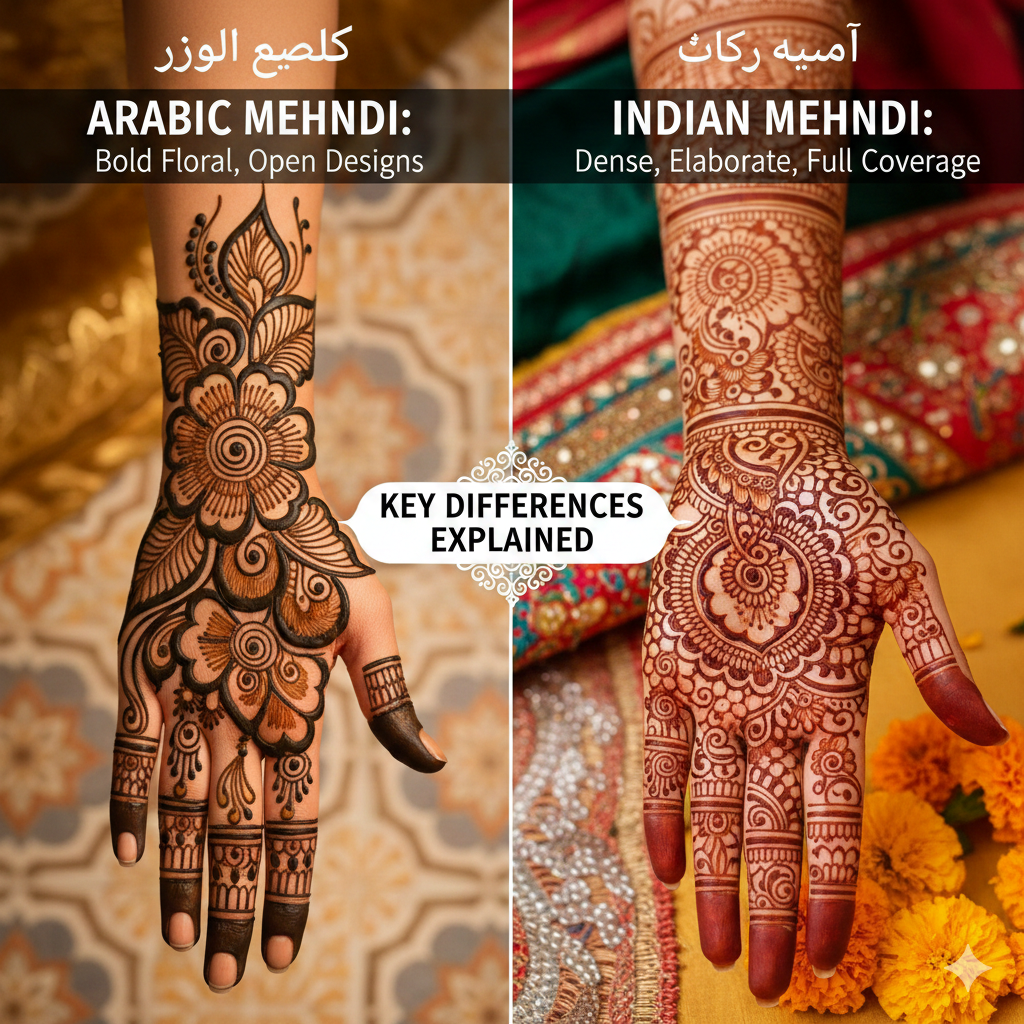
When choosing a bridal mehndi style, many modern brides find themselves deciding between Arabic mehndi and Indian mehndi. While both are beautiful forms of henna art, they differ significantly in design structure, coverage, symbolism, and how they suit modern and Western weddings.
Understanding these differences helps brides make intentional choices that align with their wedding aesthetic, comfort level, and photography style rather than relying on trends or assumptions.
Table of Contents
ToggleWhat Is Arabic Mehndi
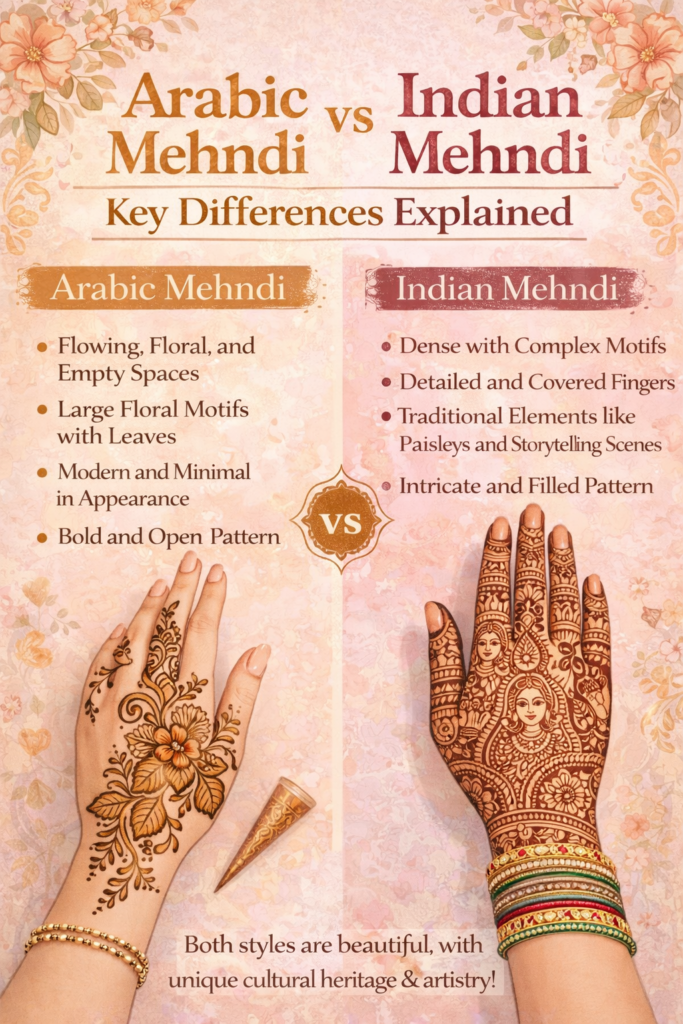
Arabic mehndi is known for its flowing patterns, bold outlines, and generous use of negative space. Designs typically extend diagonally across the hand or arm, creating an elegant and airy look.
Key characteristics include
- large floral motifs
- curved vines and leaves
- open spaces between patterns
- faster application time
Arabic mehndi is especially popular for modern, outdoor, and destination weddings because it feels lightweight and visually balanced.
Choosing between Arabic and Indian mehndi styles can be challenging for brides planning Western weddings. Each style offers a different visual impact and level of coverage. For modern ceremonies and Western wedding settings, understanding the factors involved in choosing the right bridal mehndi style helps brides select designs that feel elegant, intentional, and well suited to their overall look.
What Is Indian Mehndi
Indian mehndi is traditionally intricate and symbolic, often covering the entire hand, arm, and sometimes the feet. Designs are dense and highly detailed, featuring repeating motifs and storytelling elements.
Key characteristics include
- full hand and arm coverage
- fine and complex line work
- symbolic motifs and patterns
- longer application time
Indian mehndi is often chosen for cultural ceremonies and traditional wedding events.
Arabic Mehndi vs Indian Mehndi: Side by Side Comparison
| Feature | Arabic Mehndi | Indian Mehndi |
|---|---|---|
| Design style | Flowing and bold | Intricate and detailed |
| Coverage | Partial or selective | Full hands and arms |
| Use of space | Open with negative space | Dense and filled |
| Application time | Shorter | Longer |
| Photography clarity | Very high | Medium to high |
| Best suited for | Modern and Western weddings | Cultural and ceremonial weddings |
This comparison helps brides quickly identify which style fits their wedding vision. Style choice impacts execution complexity
Which Mehndi Style Works Better for Modern Weddings
Arabic mehndi often works better for modern weddings because it complements minimalist dresses, photographs clearly, and feels lighter during long events. The open design allows hands to look elegant without overpowering the overall bridal look.
Indian mehndi can also work beautifully in modern settings when applied selectively or combined with lighter layouts. Many brides adapt traditional elements into more spaced designs to balance heritage with modern aesthetics.
Brides unsure about design balance often find it helpful to first understand how to choose a bridal mehndi design that fits Western weddings before finalizing a style.
Brides who feel torn between bold coverage and subtle detailing often benefit from comparing mehndi design styles to see how different patterns impact comfort, photography, and visual balance.
Comfort and Practicality Differences
Comfort plays a bigger role than many brides expect.
Arabic mehndi feels lighter due to less coverage and dries faster, making it easier to manage during travel or pre-wedding activities. Indian mehndi, while visually rich, may feel heavier and require more aftercare attention, especially if applied close to the wedding date.
Timing mehndi correctly within your overall bridal beauty preparation timeline helps avoid discomfort regardless of the style you choose.
Can Brides Combine Arabic and Indian Mehndi
Yes, combining both styles is increasingly popular.
Common fusion approaches include
- Arabic style on the arms with Indian motifs on the palms
- Traditional symbols arranged in an Arabic layout
- One hand heavier and the other minimalist
Fusion designs allow brides to honor tradition while maintaining a modern look.
Quick Checklist to Choose Between Arabic and Indian Mehndi
Use this checklist to guide your decision:
Match the mehndi style with your wedding dress and venue
Decide how much coverage feels comfortable
Consider how the design will appear in photographs
Think about application time and scheduling
Choose meaning and comfort over trends
This checklist also works well as a simple printable.
Since mehndi application timing affects both color and comfort, aligning it with a clear bridal beauty planning timeline ensures a stress-free experience before the wedding day.
FAQs on Arabic Mehndi vs Indian Mehndi
Which mehndi style is better for Western weddings
Arabic mehndi is generally better suited for Western weddings because of its lighter coverage and clean design. It complements modern dresses and photographs well in natural lighting. Indian mehndi can still work if adapted with selective coverage or simplified layouts.
Does Arabic mehndi last as long as Indian mehndi
Yes, both styles last a similar amount of time when natural henna is used. Longevity depends more on skin type, aftercare, and hand usage than on design style. Dense designs may appear darker, but fading patterns are similar.
Is Arabic mehndi less traditional than Indian mehndi
Arabic mehndi is not less traditional, but it follows a different cultural style. It emphasizes flow and spacing rather than dense symbolism. Brides can still include meaningful motifs within Arabic designs if desired.
Which style photographs better
Arabic mehndi generally photographs more clearly because of its bold lines and negative space. Indian mehndi photographs beautifully as well but can appear visually dense in some close-up shots depending on lighting and camera angle.
Can Indian mehndi be made lighter for modern weddings
Yes, Indian mehndi can be adapted by reducing coverage, spacing motifs, or focusing only on palms and select areas. This approach keeps traditional elements while aligning with modern wedding aesthetics.
Final Thoughts on Arabic Mehndi vs Indian Mehndi
Both Arabic and Indian mehndi styles offer unique beauty and cultural expression. The right choice depends on your wedding style, comfort, and how you want your mehndi to feel and look on your special day. When chosen intentionally, either style can enhance a modern bridal look effortlessly.
Recent Posts
- Lalle Henna Designs 2026 — 35 Beautiful Nigerian & Hausa Mehndi Patterns for Eid
- Simple Henna Designs for Eid 2026 — Easy Patterns for Kids & Beginners
- Khaleeji Henna Designs 2026 — 50 Stunning Gulf-Style Mehndi Patterns
- Khafif Mehndi Designs 2026 — 40 Light & Minimalist Henna Patterns (Arabic Style)
- Cultural Meaning of Mehndi Explained for Non-Indian Weddings

